 English
 中文简体
中文简体 Español

Cat:Wire Wheel Brush
Its disc-shaped design, with tightly twisted wire bristles, provides uniform contact with the surface, making it ideal f...
See Details
When people hear about a Metal Bending Machine, they may picture a sheet metal workshop where flat steel or aluminum is formed into brackets, panels, frames, and other components. That is an important application, but bending equipment has a much wider role in modern manufacturing. Depending on the machine design, tooling, material, and forming method, bending can support products used in construction, HVAC systems, electrical equipment, transportation, furniture, industrial machinery, and many other fields.
The reason is simple. Many metal products need more than cutting or welding. A flat piece of material may need to become a channel, enclosure, support, frame, cover, curved section, or formed component before it can become part of a finished product. Bending creates these shapes while keeping the workpiece as one continuous piece.
For manufacturers, this opens up practical production options. Instead of thinking about bending as a process limited to sheet metal shops, it is useful to look at where formed metal components are actually needed.
Metal bending is a forming process rather than a cutting operation. The material is shaped through controlled force, tooling, or movement while remaining largely intact.
The exact method depends on the workpiece. A press brake can form straight bends in sheet and plate. A tube bending machine can create curves in hollow sections. Roll bending equipment can form larger radii and cylindrical shapes. Other bending systems are designed for profiles, bars, or specialized components.
This variety makes bending useful across different production environments.
A manufacturer may use bending equipment to produce:
The equipment required for each application is not necessarily the same. Material type, part geometry, bend sequence, production volume, tooling, and required repeatability all influence the machine configuration.
Construction is one area where formed metal appears in many different forms.
Metal components used in buildings and infrastructure often need angles, channels, supports, covers, or reinforcement sections. These parts can be produced through controlled bending before they reach the construction site.
Applications may include:
For manufacturers supplying construction-related components, repeatable forming can make assembly easier because parts need to match their intended installation position.
Bending is also useful when a project requires several related parts with different shapes. A CNC-controlled system can store production programs and help operators move between jobs without relying entirely on manual calculations.
This becomes particularly useful for manufacturers handling different orders rather than producing one identical component throughout the day.
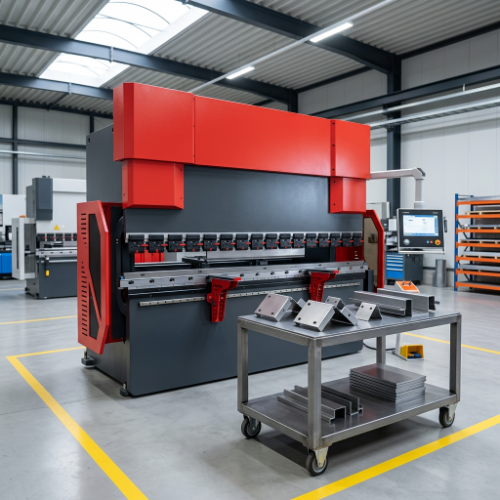
Heating, ventilation, and air conditioning systems contain many metal components that rely on forming.
Duct sections, connectors, housings, brackets, covers, and other parts often require controlled bends so they can connect properly during installation. Bending equipment can therefore become part of the wider production process for HVAC components.
A typical production workflow may involve:
The bending stage has an important connection with the later assembly process. If a flange, corner, or connection section does not form as intended, installation may require additional adjustment.
For HVAC manufacturers, the machine therefore needs to match the material and part design rather than simply provide bending force.
Electrical equipment is another area where formed sheet metal plays a practical role.
Control cabinets, equipment housings, distribution boxes, racks, covers, and mounting structures can contain multiple bends. The finished shape needs to provide space for internal components while also creating suitable mounting surfaces and enclosure sections.
A CNC bending machine can be useful when a manufacturer produces several enclosure designs. Programs can be prepared for different parts, while the operator can select the required production sequence according to the current job.
This is one reason bending equipment is relevant to electrical manufacturing even when the company does not consider itself a traditional sheet metal shop.
The machine is supporting a larger production process.
Modern office, workshop, warehouse, and commercial furniture can contain a wide range of formed metal components.
Desks, storage systems, cabinets, shelving, chairs, tables, partitions, and display structures can all contain formed metal components. Tube bending and sheet bending may both be used depending on the product design.
For example, a furniture manufacturer may need:
The challenge is often not simply creating one bend. Furniture production can involve several related components that must fit together during assembly.
This is where consistent forming becomes useful. When parts are produced through a controlled process, manufacturers can reduce the amount of adjustment required during assembly.
Automotive manufacturing contains many components that require metal forming.
Bending equipment can support the production of brackets, reinforcements, structural pieces, exhaust-related components, tubes, supports, and other formed parts.
Different components naturally require different approaches.
This is an important point for buyers. The phrase "metal bending machine" describes a broad equipment category rather than one machine that performs every possible forming operation.
The correct choice should start with the actual part.
Industrial equipment manufacturers often produce machines that contain their own frames, guards, panels, brackets, covers, and support structures.
These components may not be sold separately, but they are essential to the finished machine.
A bending machine can help create:
The production environment can also involve frequent changes between part designs. For this type of work, flexibility can matter as much as production speed.
A manufacturer may need to produce a small quantity of one bracket, switch to an enclosure panel, and then process another machine component. CNC programming and suitable tooling can help organize these different jobs.
Agricultural machinery and outdoor equipment contain many fabricated metal parts.
Frames, guards, brackets, covers, supports, mounting sections, and protective structures may require bending before welding or final assembly.
The material and geometry can vary considerably between products. A small bracket and a larger structural component do not place the same demands on a machine.
For equipment manufacturers, this means the production team should consider the entire product range before selecting bending equipment.
These questions provide a clearer starting point than choosing equipment based only on a machine name.
Home and commercial appliances often contain formed metal housings, panels, brackets, supports, and internal structures.
A flat sheet can be cut first and then bent into a shape that provides stiffness and mounting surfaces. This approach can also reduce the number of separate pieces required for certain assemblies.
Appliance manufacturers may need to process different designs during a production cycle, particularly when products share a common manufacturing platform but use different housing dimensions.
Controlled bending helps make the forming stage more predictable.
The same principle can apply to commercial equipment, laboratory equipment, storage units, and other products where a metal enclosure protects internal components.
Metal bending is not limited to conventional automotive production.
Industrial vehicles, trailers, motorcycles, transport equipment, and specialized machinery can also contain bent tubes, brackets, frames, panels, and supports.
For tubular components, the production challenge can involve more than achieving a basic curve. The manufacturer may need to consider:
A CNC-controlled bending process can be useful when the same geometry needs to be repeated across a production run.
Architectural metalwork can include panels, frames, partitions, trims, covers, supports, and decorative structures.
Unlike some heavy industrial components, architectural products may place greater emphasis on appearance and dimensional consistency.
A bent panel, for example, may become part of a wall system or interior feature. Its shape needs to match the surrounding structure so that installation remains straightforward.
This creates an interesting connection between manufacturing and design. The ability to form metal in controlled ways gives designers more options when developing products with folded edges, channels, returns, and other shapes.
| Industry | Typical Bent Components | Common Production Considerations |
|---|---|---|
| Construction | Supports, panels, brackets, frames | Material and part geometry |
| HVAC | Duct sections, connectors, housings | Repeatability and assembly fit |
| Electrical | Cabinets, panels, enclosures | Bend sequence and positioning |
| Furniture | Frames, brackets, panels | Product variety and tooling |
| Automotive | Brackets, reinforcements, tubes | Geometry and repeat production |
| Industrial Machinery | Covers, guards, supports | Flexible production |
| Agriculture | Frames, guards, brackets | Material and component size |
| Appliances | Housings, panels, supports | Consistent forming |
| Transportation | Tubes, frames, structural parts | Multi-bend geometry |
| Architecture | Panels, trims, frames | Shape and appearance |
One of the biggest differences is the variety of parts.
A dedicated sheet metal shop may focus on cutting and bending standard materials for a broad customer base. An equipment manufacturer may instead have a specific product range with recurring component designs.
This changes the way bending equipment should be evaluated.
A machine may need to handle different jobs throughout the working day.
CNC control can help by allowing operators to create, store, and recall bending programs. This can be useful when production involves several component designs or recurring orders.
Tool selection affects the shape that can be produced and how the material behaves during forming.
A manufacturer producing simple brackets may have different tooling needs from a company producing deep channels, cabinets, curved components, or complex multi-bend parts.
Tooling should therefore be considered together with the workpiece rather than treated as a separate purchase decision.
Steel, aluminum, stainless steel, and other metals do not behave in exactly the same way during bending.
Material strength, thickness, grain direction, springback, bend radius, and part geometry can all influence the forming process.
This is why a machine suitable for one application should not automatically be assumed to suit another.
The application should come first.
Before discussing machine configuration with a supplier, it is useful to prepare basic information about the actual production requirements.
A practical checklist includes:
Drawings or sample parts can also help a manufacturer understand the application more clearly.
For example, a company producing electrical enclosures may have very different requirements from a manufacturer making tubular furniture frames. Both use bending processes, but the equipment configuration and tooling strategy may differ.
Automation is becoming more relevant when manufacturers want to connect bending with other production stages.
A bending cell may work alongside cutting, material handling, welding, inspection, or other processes. In some production environments, robotic handling can also be integrated with bending equipment.
The goal is not simply to add automation for its own sake. The practical question is whether automation fits the production pattern.
It may make sense when:
For mixed production, a different setup may be more suitable. Flexible CNC equipment can provide a practical option between manual operation and a fully automated line.
A machine supplier does more than provide equipment. Understanding the customer's application helps determine whether the proposed machine configuration matches the actual manufacturing process.
For a manufacturer, this means asking about the customer's:
The same machine category can serve very different industries, but the details of the application determine how it should be configured.
That is particularly important when customers are moving from manual forming to CNC-controlled production or when they are adding bending equipment to an existing automated workflow.
So, where are Metal Bending Machines used beyond sheet metal shops?
The answer reaches into construction, HVAC, electrical equipment, furniture, automotive manufacturing, industrial machinery, agricultural equipment, appliances, transportation, and architectural metalwork.
The common factor is not the industry itself. It is the need to transform metal into a usable shape while keeping the forming process controlled and repeatable.
For manufacturers considering new bending equipment, the starting point should therefore be the component rather than the machine label. Look at the material, geometry, production pattern, tooling, automation needs, and relationship with the rest of the manufacturing process.
Once those factors are clear, it becomes easier to identify whether a CNC bending machine, tube bending system, press brake, roll bending solution, or another forming approach fits the job.
For equipment suppliers, this application-based approach also creates a better conversation with buyers. Instead of asking only which machine they want, it is more useful to understand what they need to manufacture. That difference can help connect the right forming method with the actual production task and create a practical foundation for equipment planning.
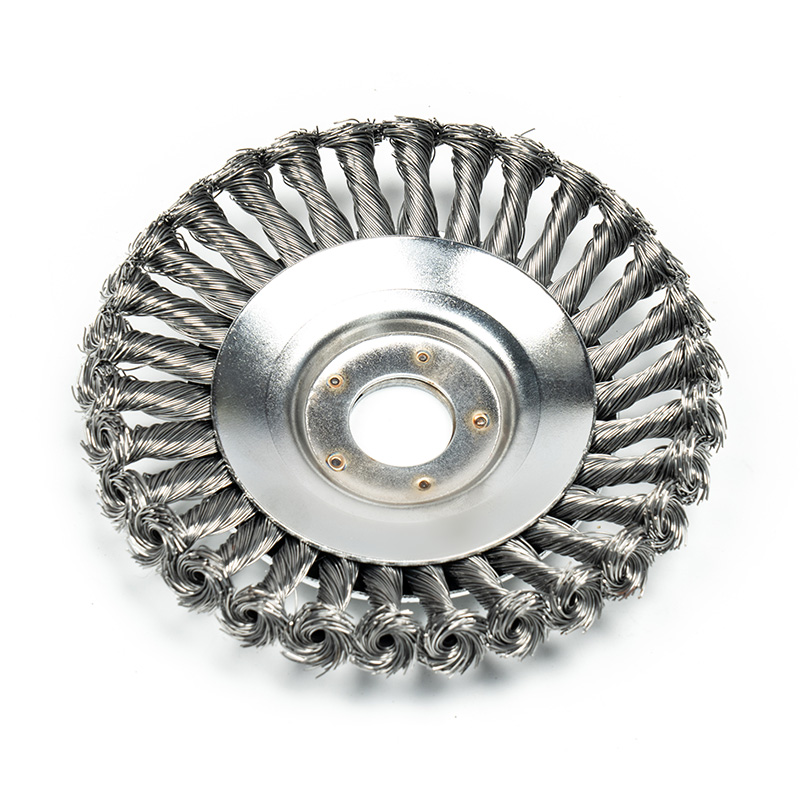
Its disc-shaped design, with tightly twisted wire bristles, provides uniform contact with the surface, making it ideal f...
See Details
The Twisted Wire Bowl Wire Brush is a powerful and durable cleaning and finishing tool designed for heavy-duty industria...
See Details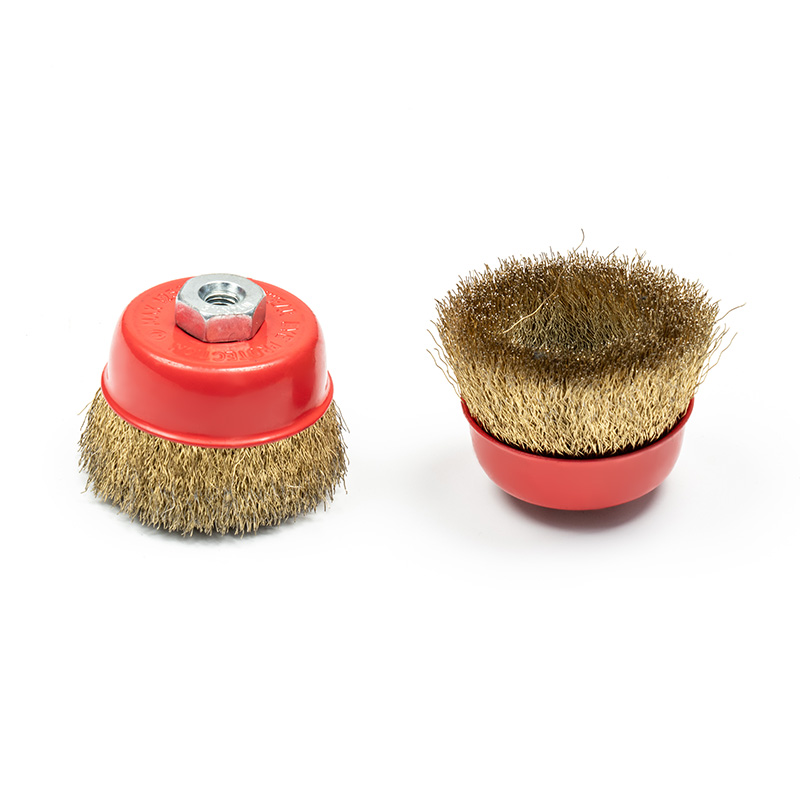
It is primarily used for cleaning, rust removal, polishing, and surface preparation. The bowl-shaped configuration of th...
See Details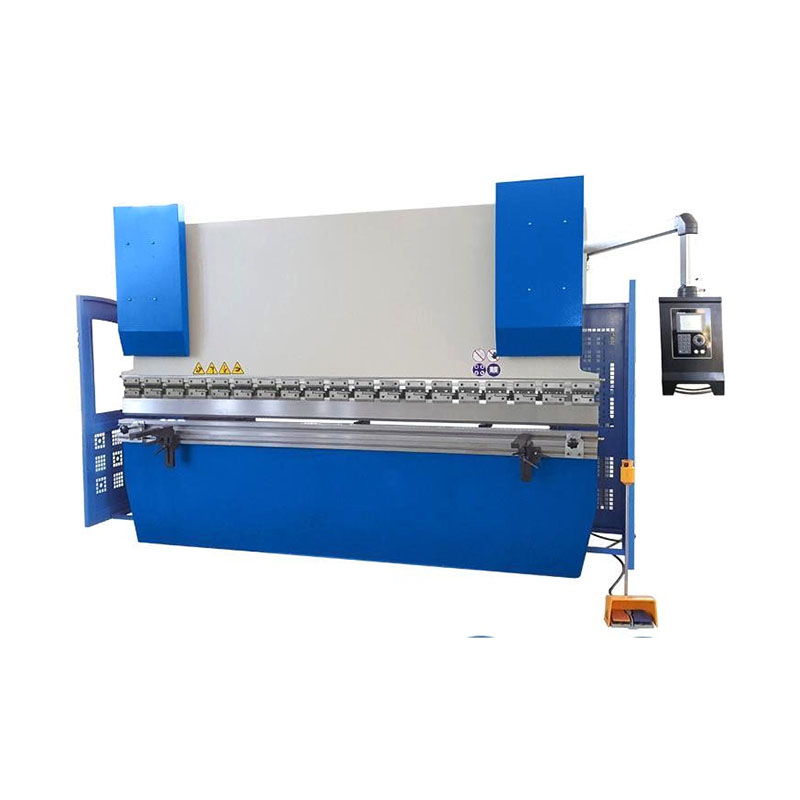
The CNC high precision bending machine is designed for bending metal sheets, such as steel, aluminum, and stainless stee...
See Details
We warmly welcome all industrial and trade companies, converters, abrasives and tool agents and distributors to join us, enjoy Tarun's platform, develop their own markets, and share world resources!
 Email:
 Phone:
+86-18867586928
 Address:
Xiaxichi Industrial Zone, Gushan Town, Yongkang City, Jinhua City, Zhejiang Province

Scan the QR code
Copyright © Yongkang Tarun Technology Co., Ltd.

Metal Processing Automatic Machine Factory

+86-18867586928


Contact Us